18,855 occupations are already being reimagined. Is yours among them? Millions of tasks. Discover how robotics and AI are changing work – and how MSD can bring these technologies into your business.
Robot distribution. Development and training. Testing and integration for autonomous processes.* *Engineering and maintenance of operational IT remain specialist responsibilities.
AI VISUALISATION OF THE FUTURE · NOT FOOTAGE OF AN MSD FACILITY ROBOTICS HANDLES PHYSICAL TASKS. AI CONNECTS PROCESSES.
OCCUPATION ATLAS / 2026–2036
What happens to your occupation?
Find your occupation and discover which tasks robots and AI could take on in future. Search the complete imported collection of 18,855 occupation-title/KldB-code combinations.
Explore 18,855 occupations · Names, KldB codes, occupational fields and synonyms. Press the down arrow to move to the results.
Occupation names come from the German Federal Employment Agency's classification directory; automation assessments use our own heuristic. These are not official forecasts. Questionable mappings are flagged and are not recommended as validated solutions.
Loading the occupation index …
100 SELECTED OCCUPATIONS / WHERE TO START – AND WHY?
Which jobs will be the first to be replaced by robots?
Which tasks can machines take on first? Where should your business start – and why? These 100 selected occupations suggest starting points. Clearly bounded, repetitive steps with measurable quality are the best initial candidates. This selection does not predict the order in which entire occupations will disappear.
Specialised systems are already changing individual tasks.
Real systems are available today. A fully connected robotic world remains a vision of the future. The AI scenes illustrate industries, not existing MSD customer installations or guaranteed capabilities.
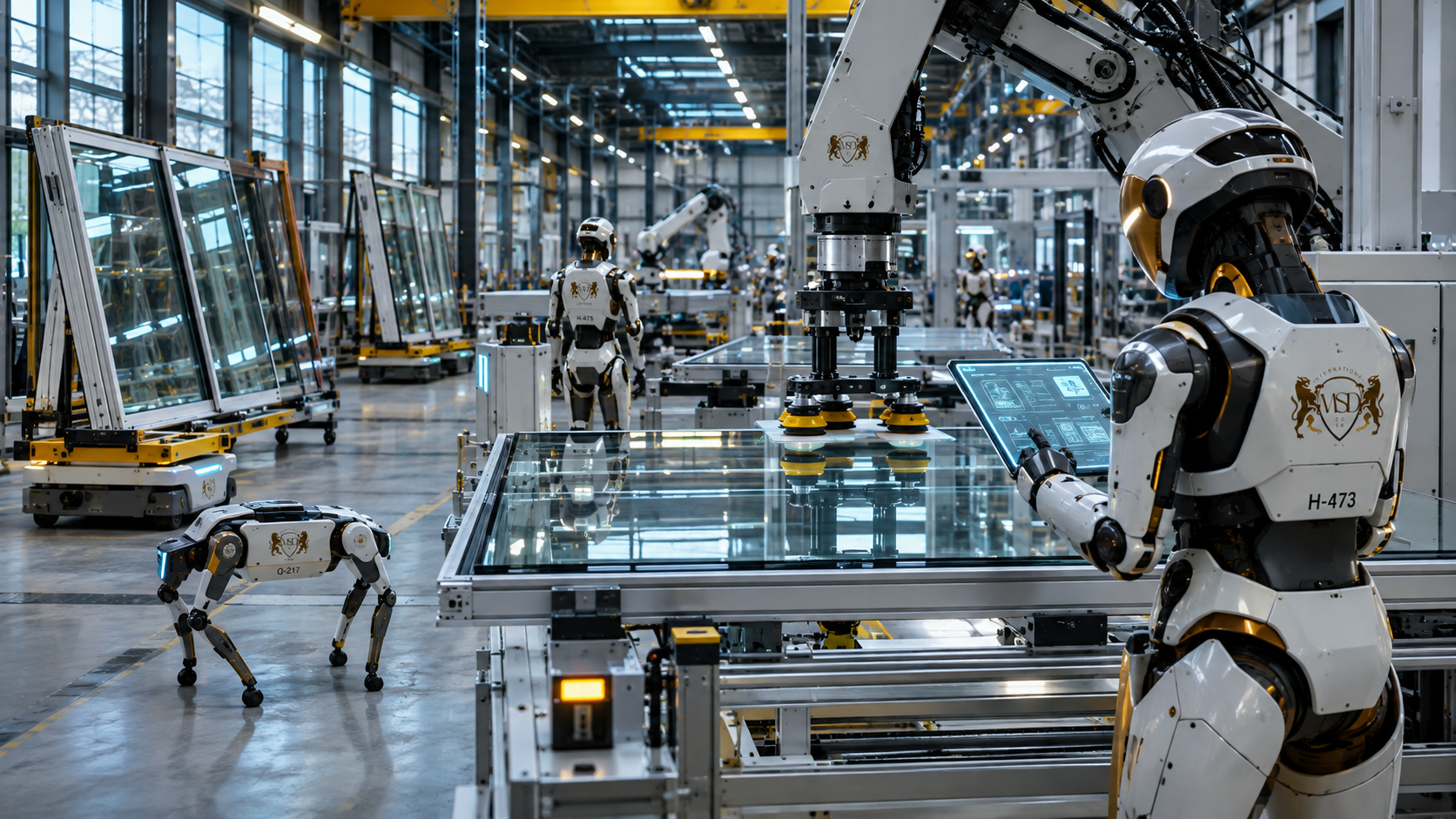
AI FUTURE VISUALISATION / Specialised subtasks can be implemented today
Industry & manufacturing
Task: Feed materials, perform repetitive processing and inspection.
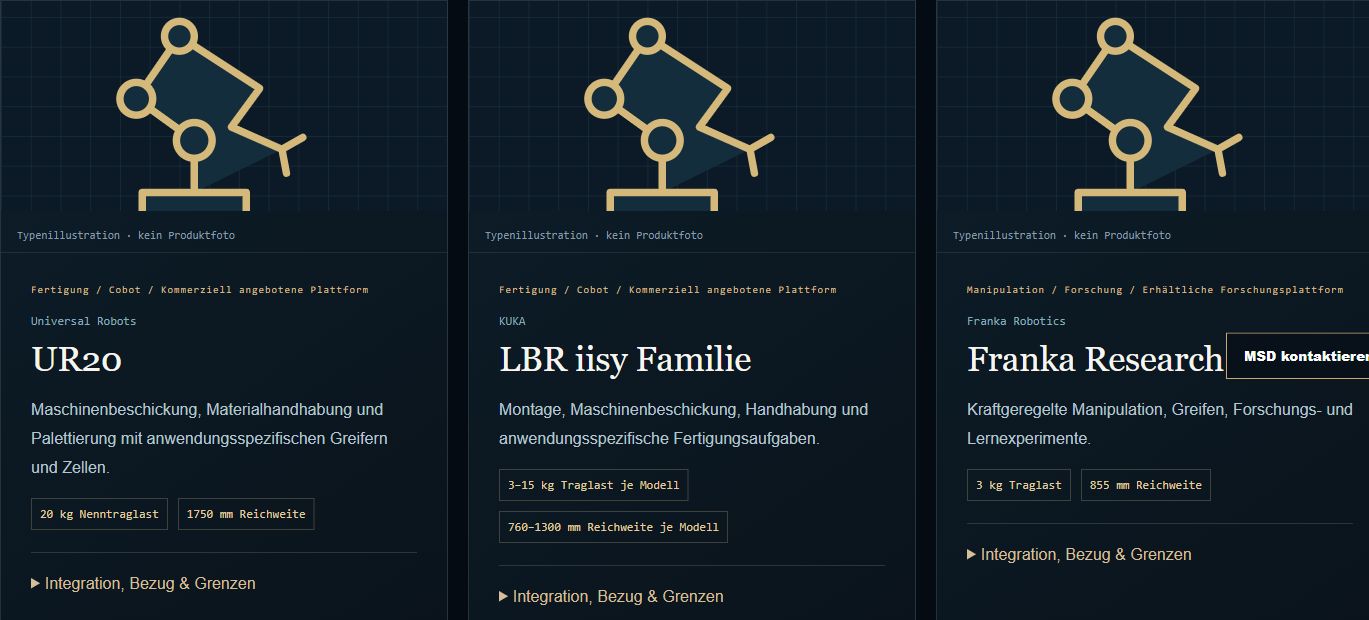
Technical approach: Robot arms, cobots and cameras in configured cells.
MSD supports businesses with selection, development, testing and integration. The services delivered directly or coordinated with specialist partners are agreed in advance for each project.
01 / ANALYSE
Understand the process.
Record the task, environment, data and requirements. Define a measurable bottleneck and clear responsibilities.
02 / PROCUREMENT & DISTRIBUTION
Select the technology.
Identify suitable robots, AI systems, components and, where required, integration partners.
03 / PROGRAMMING & TRAINING
Connect the workflows.
Develop control logic, interfaces and models, or coordinate specialist development work.
04 / TESTING
Demonstrate performance.
Test success criteria and failure cases. Arrange required safety assessments with qualified specialist partners.
05 / INTEGRATION & SUPPORT
Prepare operations.
Support deployment, documentation, instruction and agreed ongoing assistance. Define scope and responsibilities for each project.
Not every task justifies robotics. Model your process using your own costs. The defaults are illustrative calculation examples, not robot prices or MSD quotations.
Calculation and assumptions
Current costs = hours × hourly rate. Potentially freed hours = hours × share of tasks × realised share. Net relief = freed hours × hourly rate − ongoing operating costs. Payback = investment / positive monthly net relief. With zero or negative relief, there is no payback.
Non-binding model excluding taxes, financing, downtime, transition and additional staffing costs. Quality, throughput and actual cost reduction must be measured in operation.
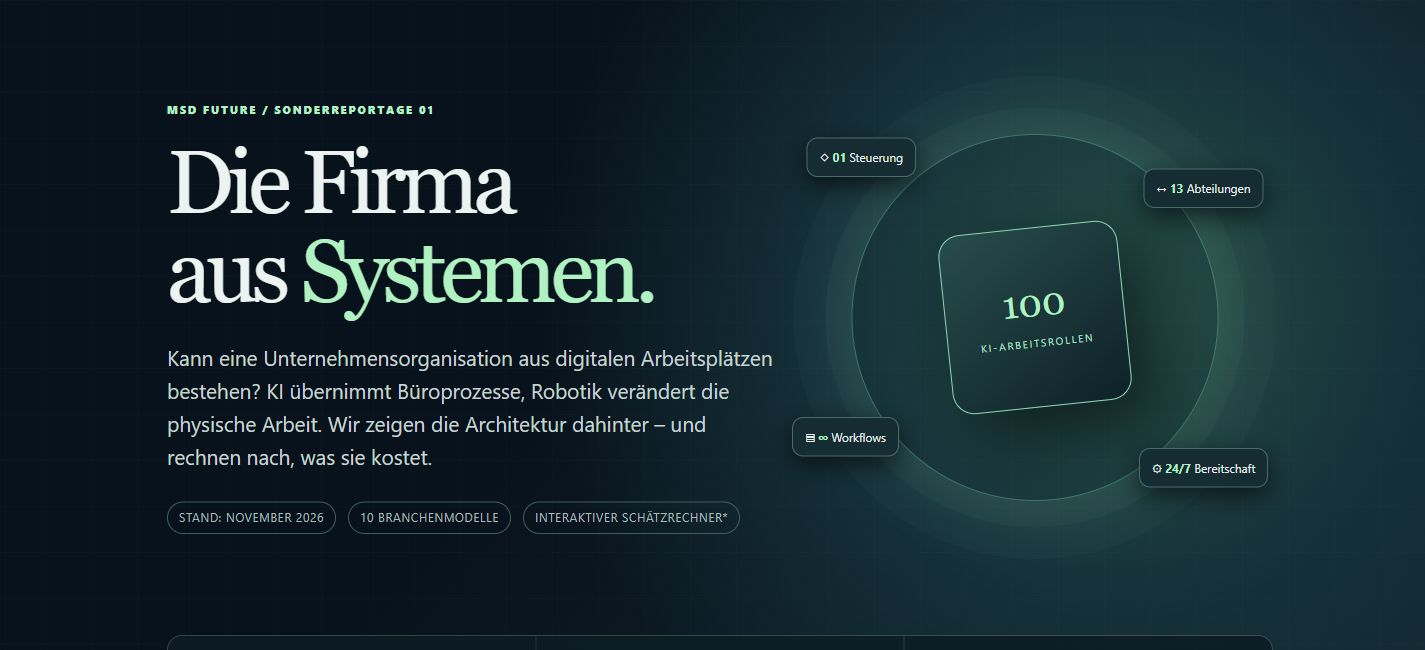
10,000 AI agents as a scaling target – across digital and physical processes. Controlled tasks, data and approvals are what matter. The occupation table covers 46 distinct occupational fields across ten broad KldB groups. This is considerably broader than the existing reference model with 13 organisational departments.
10,000AI agents · scaling target
46Occupational fields in the imported atlas
18,855Title/code combinations
Today / 2026
AI assistants, OCR/RPA, specialised robot cells and mobile transport in bounded environments. The specific task determines what is suitable.
2027–2030 / Piloting
Connect agents and machines through interfaces. Measure robustness, quality, supervision and economic viability in a pilot.
2031–2036 / Scenario
More connected businesses, learning robotics and humanoid platforms. Broad availability remains technically and economically uncertain.
AI visualisation of the future · short film supplied by the user, not an actual MSD installation.
AI FUTURE VISUALISATION
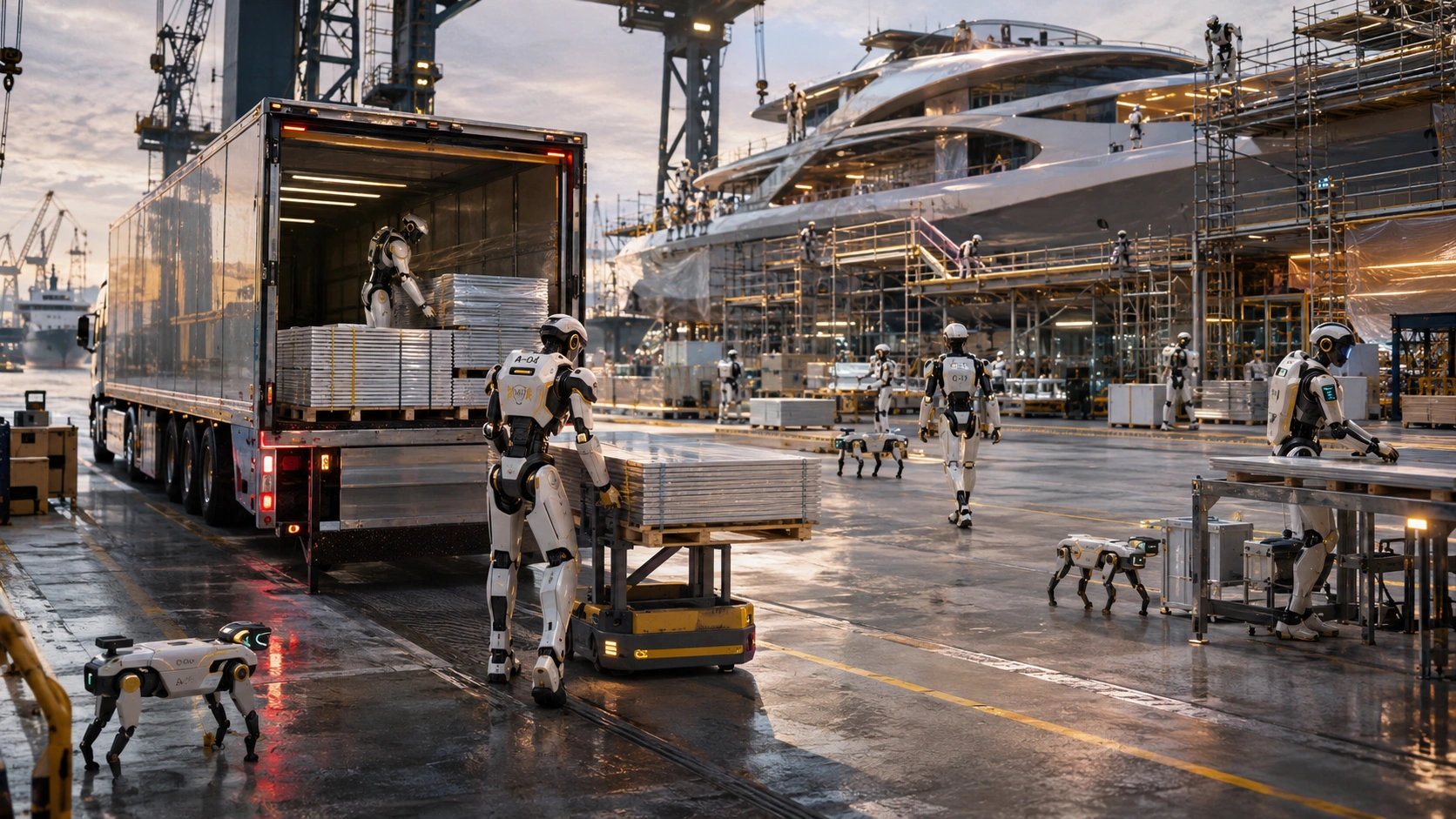
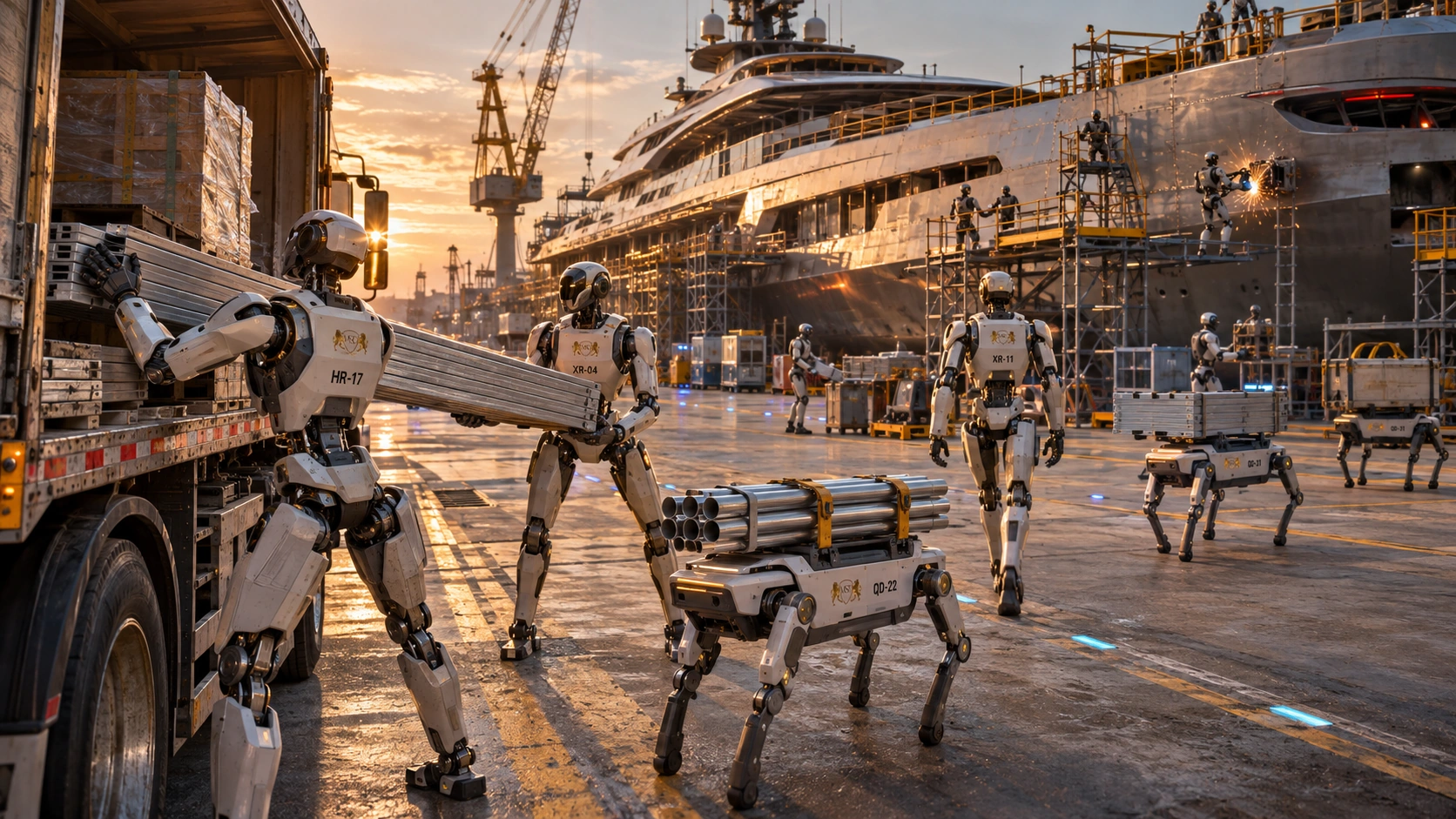
Logistics meets shipbuilding.
Vision of the future supplied by the user. Not footage of an actual MSD operation or customer project.
AI FUTURE VISUALISATION
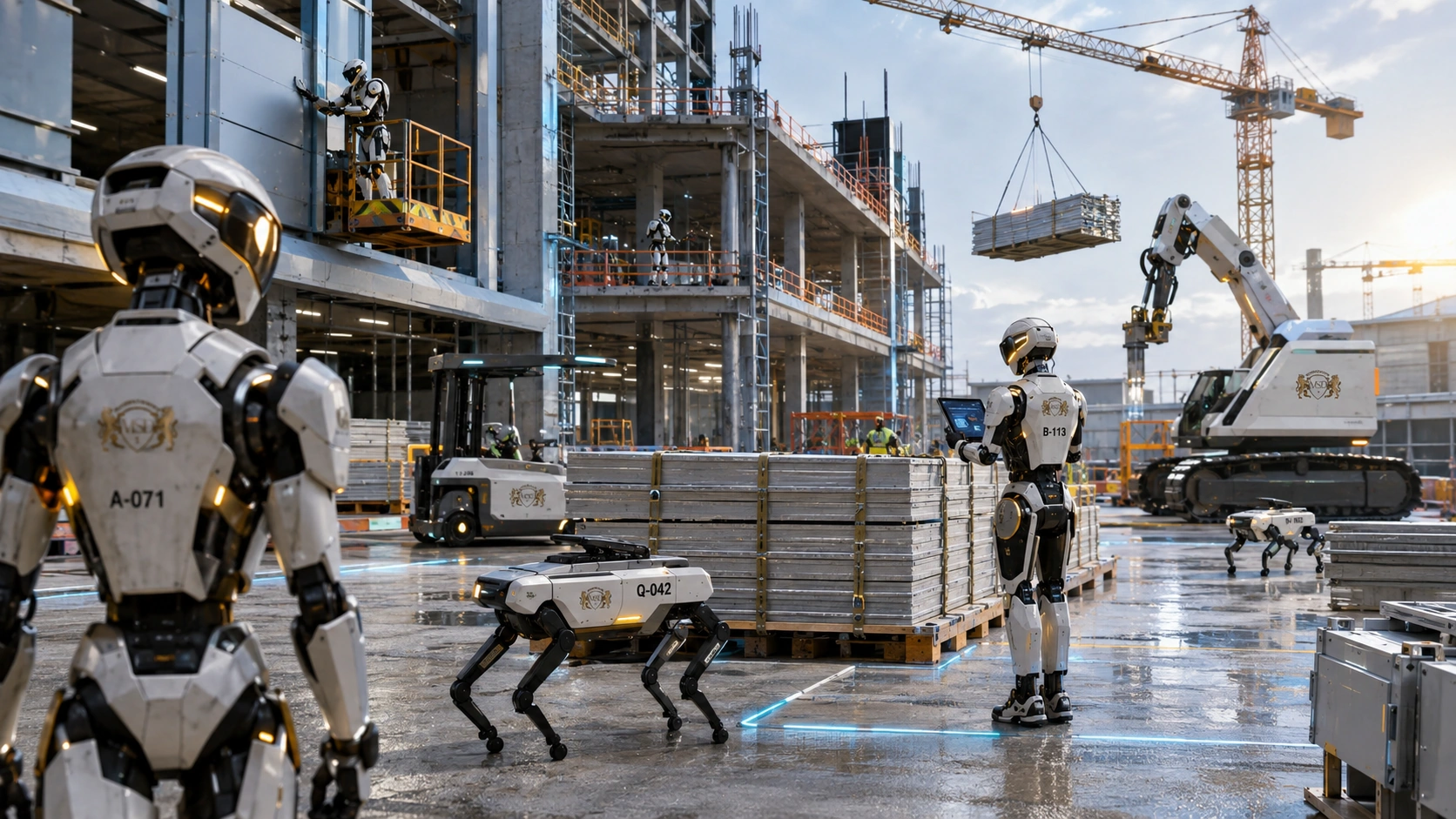
New tools for major tasks.
Vision of the future supplied by the user. Not footage of an actual MSD operation or customer project.
AI FUTURE VISUALISATION
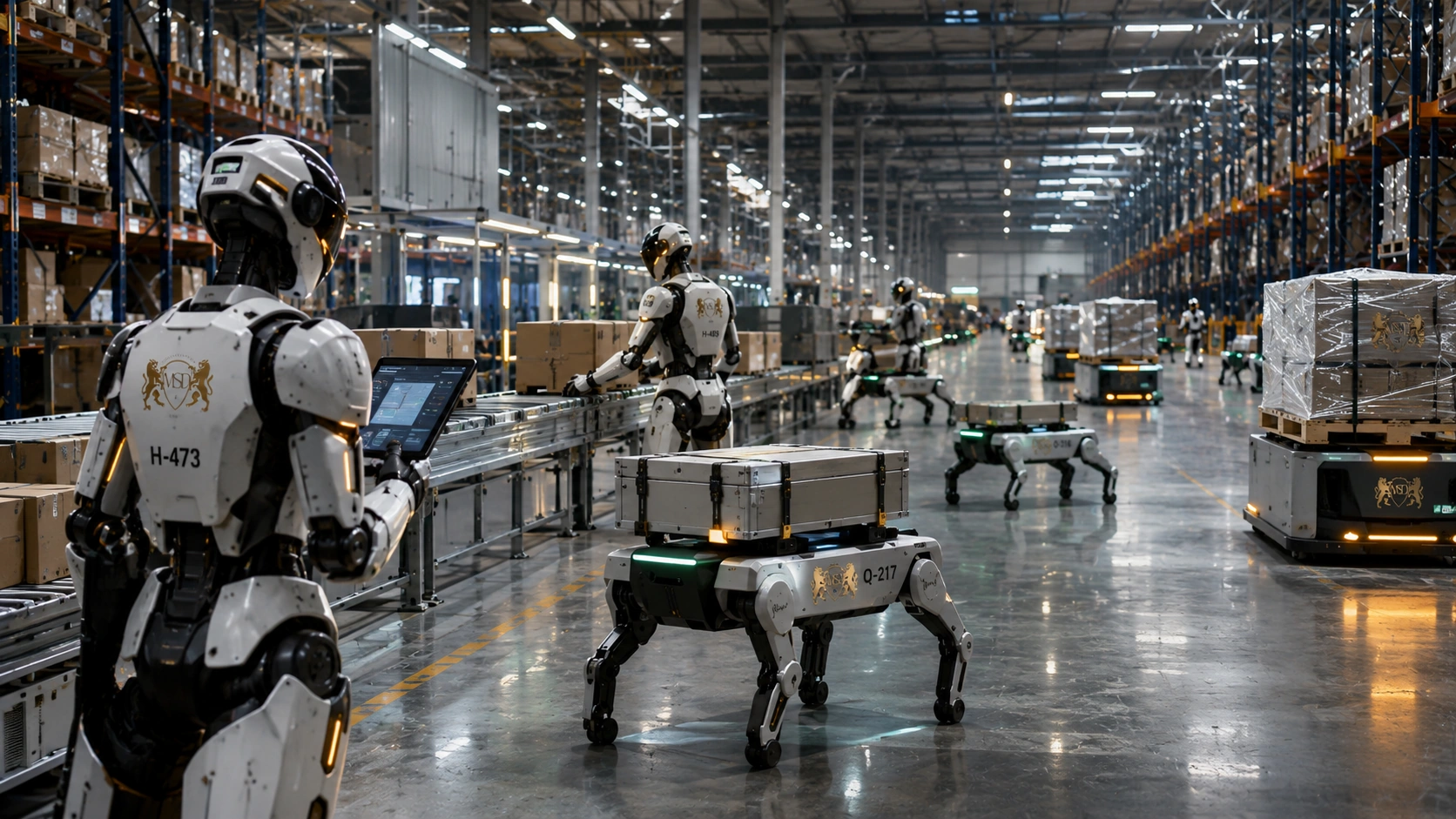
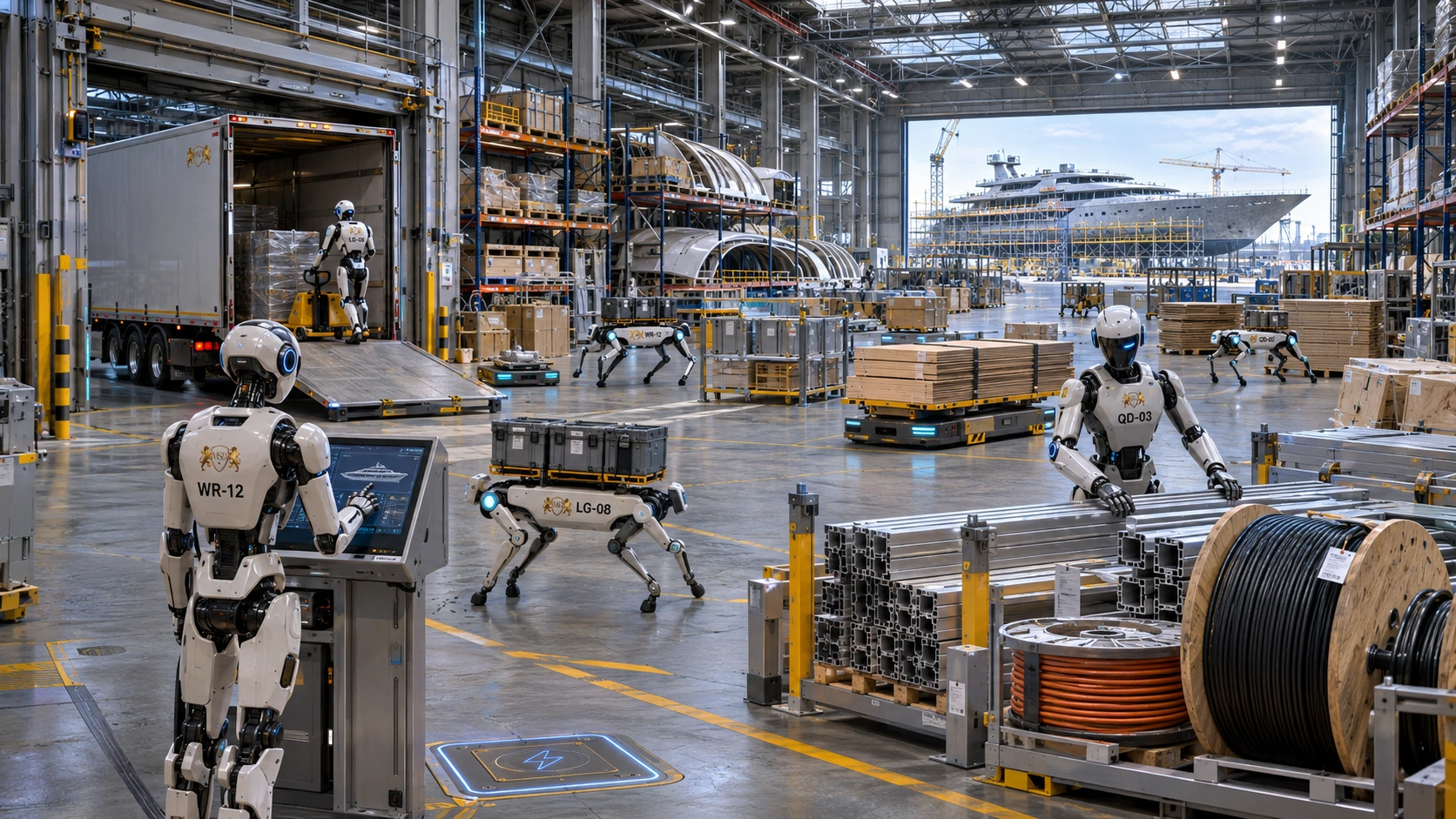
Material flow becomes connected.
Vision of the future supplied by the user. Not footage of an actual MSD operation or customer project.
AI FUTURE VISUALISATION
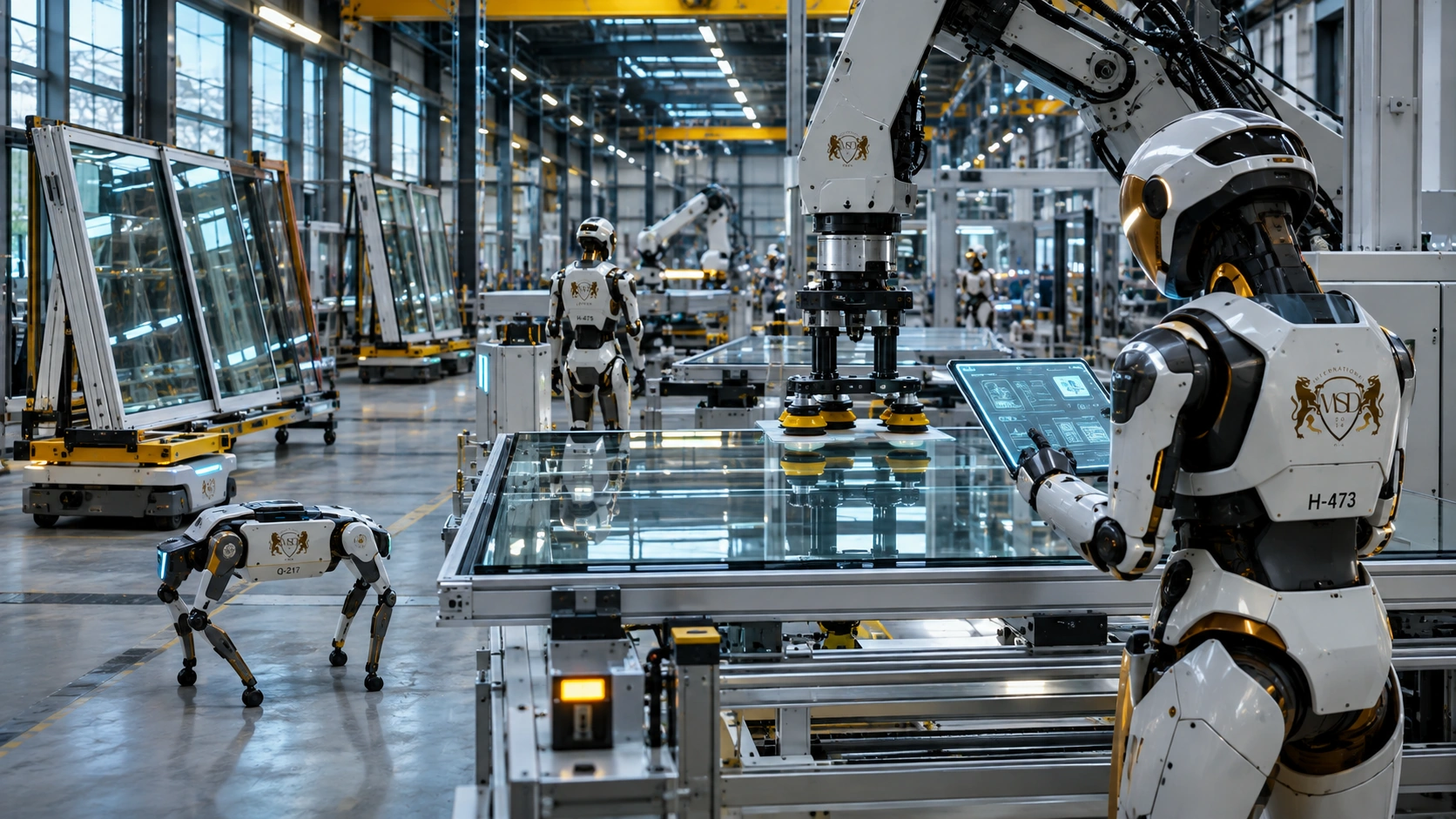
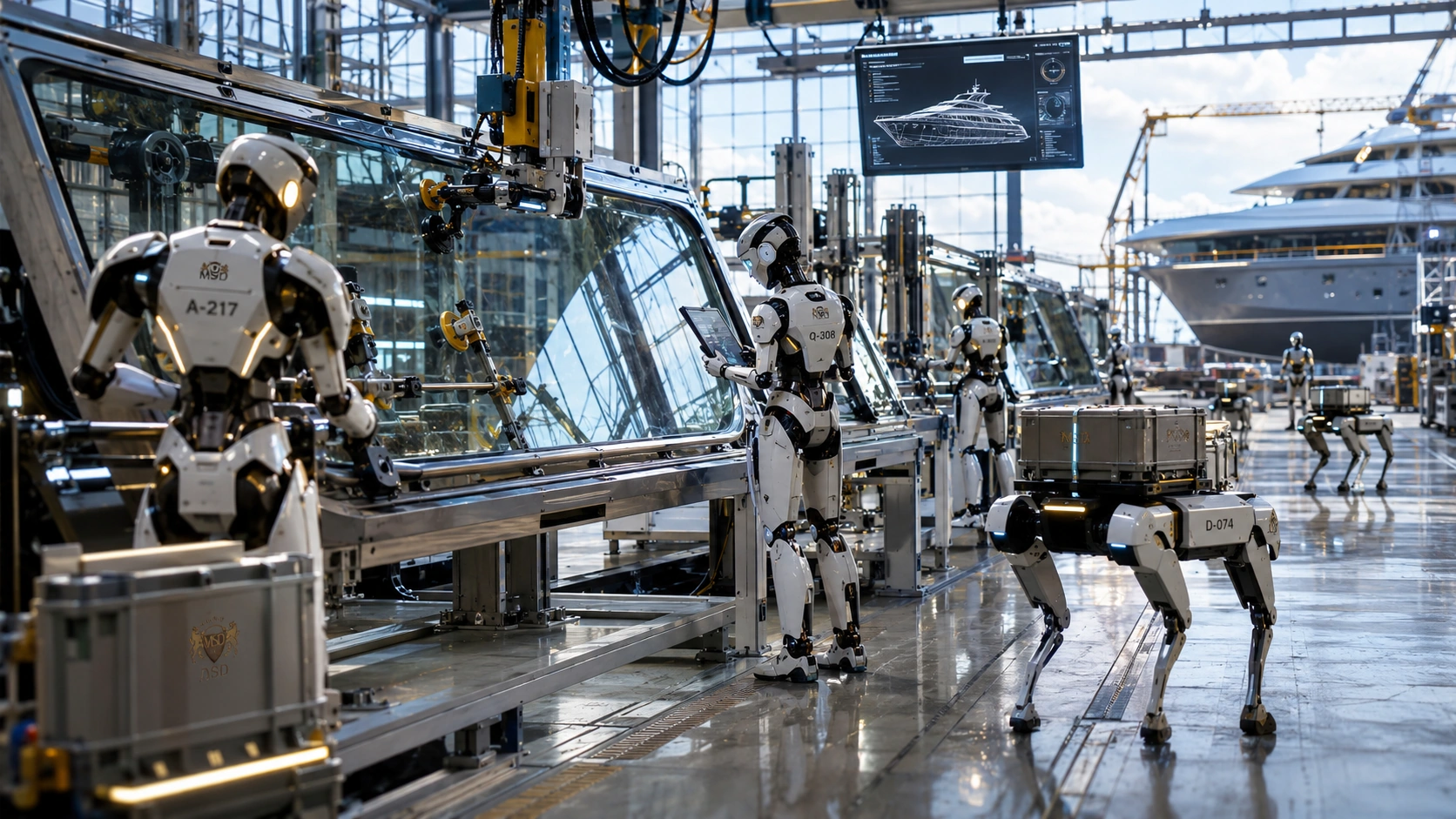
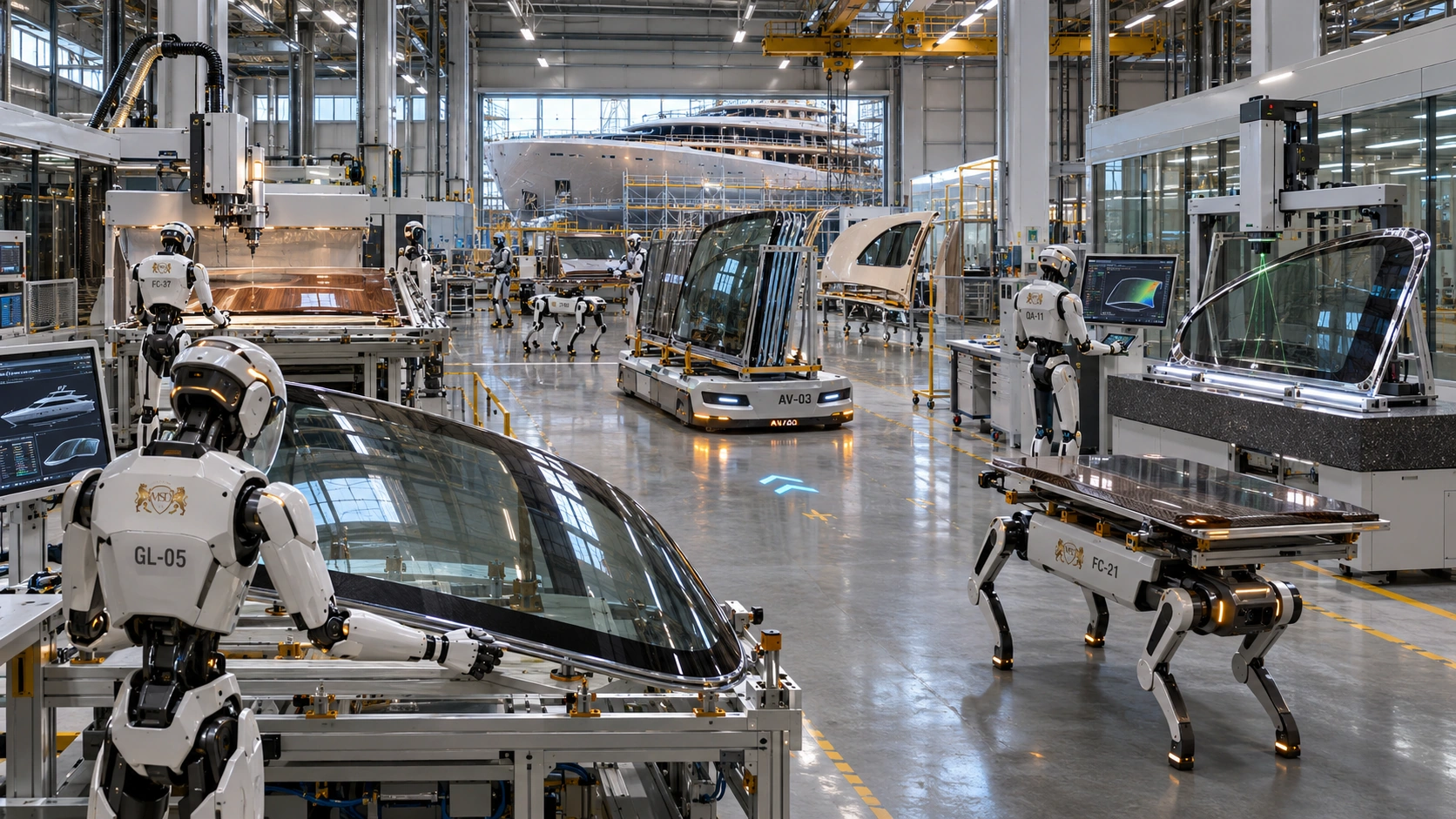
Precision in glass processing.
Vision of the future supplied by the user. Not footage of an actual MSD operation or customer project.
AI FUTURE VISUALISATION
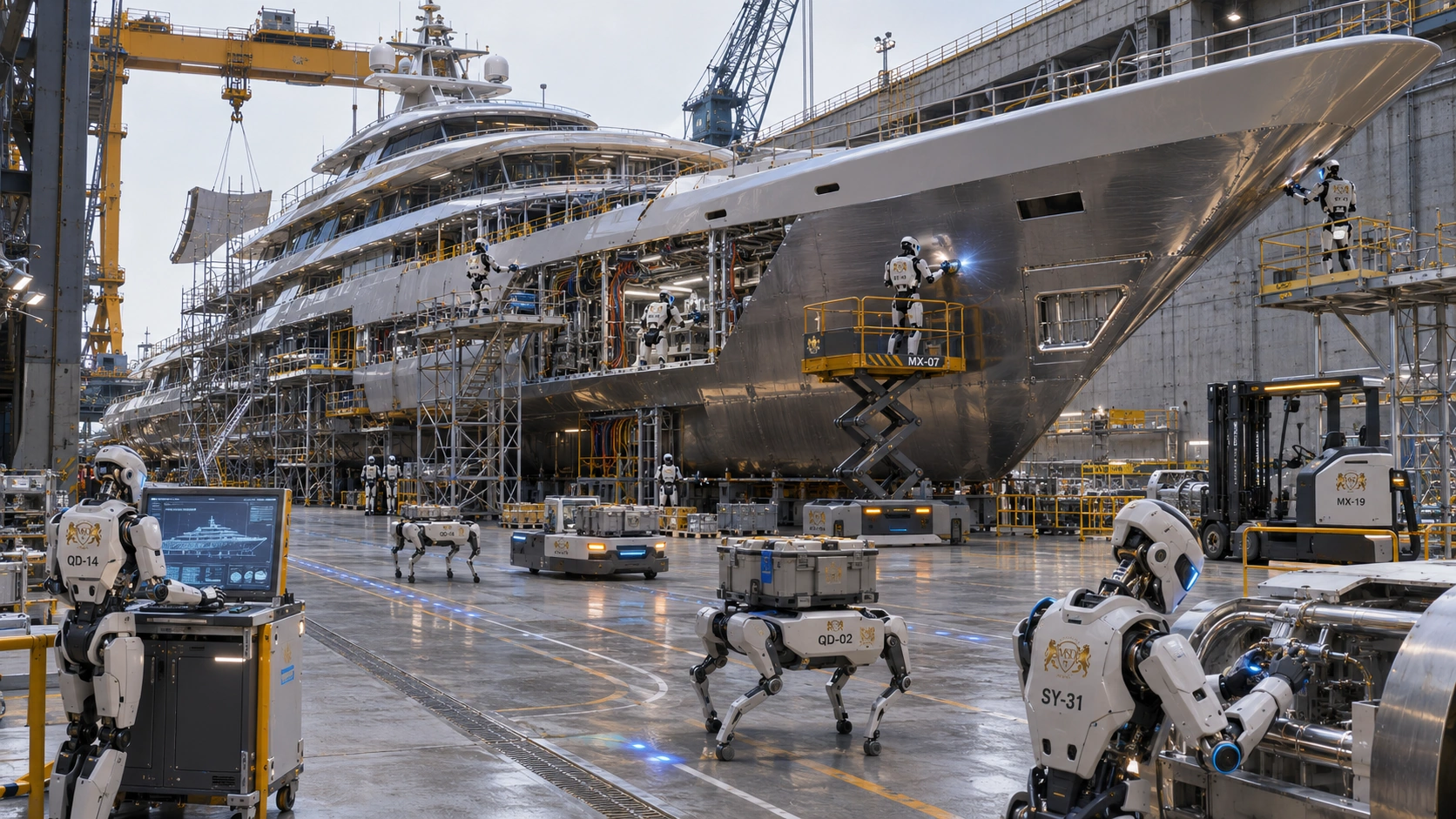
Rethinking the maritime industry.
Vision of the future supplied by the user. Not footage of an actual MSD operation or customer project.
DISCOVER MSD
A world of possibilities.
YOUR BUSINESS / THE NEXT STEP
Which task should your next machine take on?
Describe your workflow. We will discuss whether and how it could be automated using robotics or AI.
MSD / PROJECT CONCEPTS & SOLUTION APPROACHES
You see the potential. The journey starts here.
A warehouse with 30 employees, a packing station or an office full of follow-up questions: find a similar task and discover how a manageable pilot could begin.
Robot distribution and procurement, development, teaching, testing and integration – with a clearly bounded goal: approved routine processes operating up to 100% autonomously.*
* A target vision, not a blanket performance guarantee. Engineering and maintenance of operational IT remain specialist responsibilities. Safety, exceptions, maintenance and responsibilities are defined for every process.
Machines that handle physical tasks. AI that connects workflows. People who turn possibilities into practical projects. MSD brings technical practice, software and entrepreneurship together.
Our project approach covers process analysis, platform selection, programming, integration, training and ongoing support within an agreed scope. Manufacturing, intralogistics, office workflows and specialised service robots offer concrete starting points. Complex maritime and household tasks remain application-specific research.
We are looking for customers, technical partners and strategic investors who want to help build the next generation of connected operations. Research platforms and future scenarios are clearly distinguished from deployed customer solutions.